

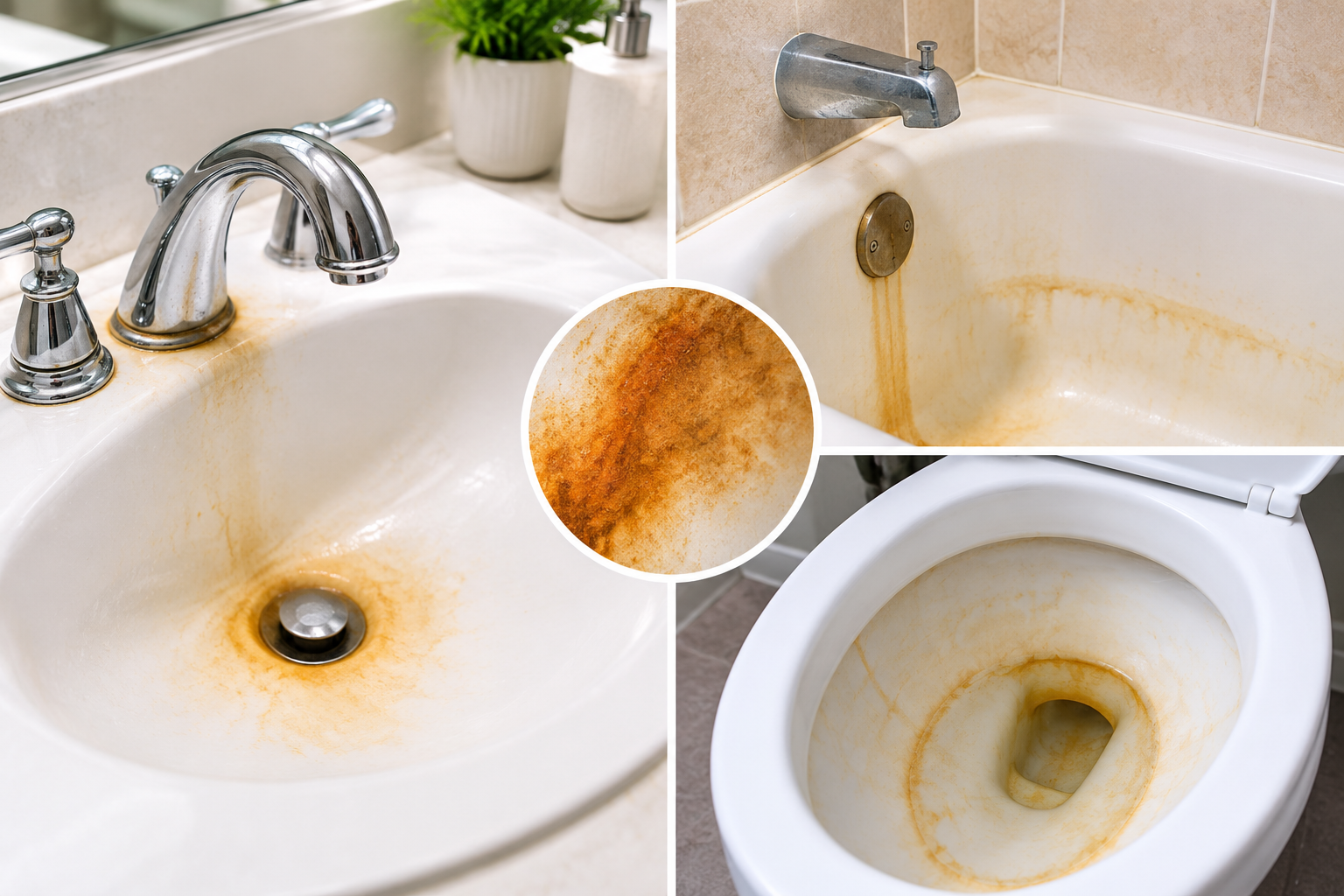
Orange or brown stains around your bathroom fixtures are frustrating when they return right after cleaning. These marks are caused by iron in your water, manganese deposits, or corrosion inside your plumbing. Hard water also leaves mineral buildup, but it does not cause every type of stain.
The first step toward preventing these recurring stains is identifying what is in your water and where the problem may be coming from. Once you know the cause, you can choose the cleaning or water-treatment approach that makes sense for your home.
Common Causes of Orange and Brown Bathroom Stains
Iron in Your Water
Iron is one of the most common causes of reddish-brown stains on sinks, bathtubs, toilets, and other surfaces that regularly come into contact with water. When dissolved iron reacts with oxygen, it forms rust-colored particles that settle on fixtures.
You may also notice discoloration on laundry or a metallic taste in your water. However, the appearance of a stain alone cannot confirm that iron is responsible. Water testing can help identify whether iron is present and at what level.
Manganese in the Water
Manganese can also leave stains on bathroom fixtures. These marks are often darker brown or nearly black, although the appearance can vary when manganese occurs alongside iron.
If your bathroom has both orange and dark stains, then there is a high chance of involvement of several minerals. That’s why testing helps to distinguish between these possibilities and provides a clear picture of your water quality.
Corrosion Inside Your Plumbing
Sometimes, the problem starts in the pipes instead of the original water supply. Corroding metal pipes can also introduce rust particles into the water, which may then collect around faucets, drains, and toilet bowls.
It is important to pay attention when the discoloration appears. If water comes out rusty or cloudy, then plumbing corrosion or a change in the water supply may be worth investigating.
Hard-Water Mineral Buildup
Hard water contains higher concentrations of calcium and magnesium. These minerals commonly leave chalky deposits, soap scum, and cloudy residue on bathroom surfaces.
Hard-water buildup is different from iron staining, even though the two problems can occur together. A water softener is designed primarily to address hardness; it is not automatically the right solution for every orange or brown stain.
Why Do the Stains Keep Coming Back?
Cleaning removes the visible marks, but it may not address the cause. If water continues to carry iron or manganese, new deposits can form whenever the affected fixtures are used.
The same applies when corrosion continues to release particles into the plumbing. Regular scrubbing improves the appearance temporarily, but the discoloration is likely to return until the underlying issue is resolved.
Try to avoid using hard cleaners without checking the product instructions and ensuring the cleaner is suitable for the fixture. Some cleaning products can damage finishes, and mixing household chemicals can create dangerous fumes.
Can Water Filtration or a Water Softener Help?
The right treatment relies on the water problem because a system that is designed to remove iron or manganese may help reduce staining when testing confirms these minerals are responsible.
A water softener usually addresses hardness, but under suitable conditions, it also deals with certain amounts of dissolved iron. Its effectiveness depends on the water chemistry and the system’s specifications.
A whole-home filter may also be appropriate, but not every filter removes every type of mineral or contaminant. Reverse osmosis systems are commonly used for drinking-water treatment and should not be assumed to solve staining throughout an entire bathroom.
For homeowners who are considering water filtration, the best way to start is to identify the cause before choosing equipment because the treatment system should match the water conditions, not just the color of the stain.
How to Find the Right Solution
Start by finding where the stains appear and whether your water looks discolored when it comes out of the tap. After that, note whether the problem affects several fixtures, appears after plumbing work, or occurs alongside other changes in taste, smell, or appearance.
Next, arrange water testing, and if the discoloration starts suddenly or appears to come from corroding pipes, then inspect the plumbing as well.
At Peacock Water, we offer free water analysis to help homeowners identify concerns and determine which water-treatment system may suit their needs.
Contact us today for water filtration, whole-home water filters, water softeners, and under-sink reverse osmosis systems.